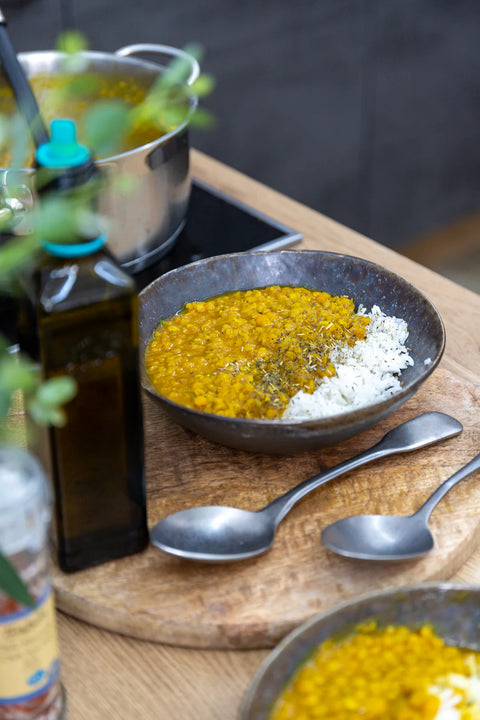
There are few things more satisfying on a cold evening than a thick, steaming bowl of lentil soup. It is the kind of recipe that has been passed down through generations across continents, from the classic dals of India to the hearty shorba of the Middle East, from Italian zuppa di lenticchie to the spiced stews of North Africa. What unites them all is simplicity: humble dried pulses, a handful of aromatics, and a generous pour of quality olive oil, transformed into something deeply nourishing and utterly delicious.
This particular version leans into warmly spiced, coconut-enriched territory, a cross between a classic Indian red lentil dal and a creamy winter soup. It comes together in under 40 minutes, costs very little per serving, and freezes brilliantly. Best of all, the secret weapon is the oil you cook with. A properly cold-pressed extra virgin olive oil, like our Agora Extra Virgin Olive Oil, brings a peppery depth that stock-cube-and-water versions simply cannot match.
A Quick Guide to Lentil Varieties
Not all lentils are created equal, and the variety you choose shapes the finished soup entirely. Here is a brief rundown of what is available in most UK supermarkets and specialist grocers.
- Red and yellow lentils - These break down quickly during cooking, yielding a naturally thick, creamy texture without any blending. They are the default choice for dals, Middle Eastern soups, and this recipe. Cook time: roughly 15 to 20 minutes.
- Green and brown lentils - Firmer and earthier, these hold their shape well. They work better in salads, stews, and chunky soups where you want visible lentil pieces. Cook time: roughly 25 to 35 minutes.
- Puy lentils (lentilles du Puy) - The French aristocrat of the lentil world. Slate-grey, with a distinctive peppery, mineral flavour and a satisfying bite. Excellent in warm salads with goat cheese, but overkill for a blended soup.
- Beluga lentils - Named for their resemblance to caviar, these glossy black lentils hold their shape beautifully and have a rich, earthy taste. Wonderful in grain bowls or as a side dish, though their firm texture means they are rarely used in pureed soups.
For this recipe, red lentils are ideal. They dissolve into the broth, creating a velvety base that needs little to no blending. If you prefer a chunkier soup, swap in green or brown lentils and add an extra 10 to 15 minutes of simmering.
Why Your Olive Oil Choice Matters
It might seem like a small detail, after all, the olive oil is just the cooking medium, right? Not quite. In a soup this simple, every ingredient pulls its weight, and the oil is doing far more than stopping onions from sticking to the pan.
A quality extra virgin olive oil adds a subtle fruitiness and a pleasant peppery finish that lingers at the back of the throat. That gentle heat is actually a sign of high polyphenol content, the same antioxidants that make EVOO one of the healthiest cooking fats available. Cheap, refined oils lack this complexity entirely; they bring nothing but slickness.
For this soup, I reach for our Agora EVOO during cooking (its medium intensity handles the heat of sauteing without losing character) and finish each bowl with a drizzle of Garlic Extra Virgin Olive Oil for an extra layer of flavour. Browse our full extra virgin olive oil collection to find one that suits your palate.
Ingredients
- 1 to 2 tablespoons vomFASS Agora Extra Virgin Olive Oil (for cooking)
- 1 teaspoon vomFASS Curry Oil (optional, but adds something truly wonderful)
- 2 medium onions, finely diced
- 4 cloves of garlic, minced
- 2 teaspoons fresh ginger, grated (or more, to taste)
- 1 teaspoon ground turmeric
- 1 teaspoon ground coriander
- 1 teaspoon ground cumin
- 1 teaspoon sweet paprika
- 1 teaspoon garam masala
- 200 g (1 cup) red lentils, rinsed
- 750 ml (3 cups) vegetable stock
- 250 ml (1 cup) coconut milk
- 250 g (1 cup) tinned chopped tomatoes (optional)
- Juice of 1 lemon or lime
- Fresh coriander or flat-leaf parsley for garnish
- Salt and freshly ground black pepper, to taste
Method: Step by Step
- Sautee the aromatics. Heat the olive oil in a large, heavy-bottomed saucepan over a medium heat. Add the diced onions and cook for 3 to 4 minutes, stirring occasionally, until they turn soft and translucent. Add the garlic and ginger and cook for another minute or so until wonderfully fragrant. This foundation of slowly softened alliums is what separates a truly flavourful soup from a flat one, do not rush it.
- Bloom the spices. Add the turmeric, ground coriander, cumin, paprika, and garam masala. Stir everything together and cook for about 30 seconds. You will know the spices are ready when the kitchen fills with a warm, toasty aroma. Blooming spices in hot oil releases their essential oils and deepens the flavour enormously, a technique shared across Indian, Middle Eastern, and North African cooking.
- Add the lentils and liquid. Tip in the rinsed red lentils, then pour over the vegetable stock and chopped tomatoes (if using). Give everything a good stir and bring to a gentle boil.
- Simmer until tender. Reduce the heat to low, cover the pan with a lid, and let the soup simmer for 15 to 20 minutes. The lentils should break down and absorb most of the liquid. Stir occasionally to prevent sticking on the bottom.
- Add the coconut milk. Pour in the coconut milk and stir through. Continue simmering, uncovered, for a further 5 to 10 minutes until the lentils are completely soft and the soup has reached a thick, creamy consistency. If it is too thick for your liking, thin it with a splash more stock or water.
- Season and finish. Squeeze in the lemon or lime juice, the acidity brightens everything. Season generously with salt and pepper. Taste and adjust: a little more citrus, a pinch more salt, perhaps a touch of chilli flakes if you fancy heat.
- Serve. Ladle into warm bowls. Drizzle with vomFASS Curry Oil, scatter fresh coriander or parsley over the top, and serve with crusty bread or warm naan.
Technique Tips: Getting the Best From Your Soup
Sauteing aromatics properly - This is the single most important step. Onions should be soft and just turning golden before anything else goes in. If you add garlic too early, it burns and turns bitter. If you add spices before the onions are ready, they catch on the dry pan. Patience here pays off in every spoonful.
Rinsing your lentils - Always rinse red lentils in a fine-mesh sieve under cold running water until the water runs clear. This removes surface starch and any grit, resulting in a cleaner flavour and less foam during cooking.
Blending options - Red lentils break down naturally, so this soup is lovely as it is: rustic and slightly textured. However, if you prefer a silky-smooth finish, use a stick blender directly in the pot and blitz until completely smooth. Alternatively, blend half the soup and stir it back in for a satisfying halfway texture.
Adjusting thickness - Lentil soup thickens considerably as it sits and even more when refrigerated. When reheating, you will almost certainly need to add a splash of stock or water to loosen it back to a scoopable consistency.
Seasonal Comfort: Why Lentil Soup Belongs in Your Winter Rotation
There is a reason lentil soup appears on menus across the Northern Hemisphere as soon as the temperature drops. Lentils are one of nature's most efficient warming foods: high in complex carbohydrates for sustained energy, packed with plant-based protein (roughly 9 grams per cooked 100 g serving), and rich in iron and folate. A single bowl of this soup delivers the kind of deep, lasting warmth that a cheese toastie cannot quite manage.
According to the NHS guidelines on pulses and nutrition, lentils are an excellent source of fibre and protein, and eating more pulses is recommended as part of a balanced diet. They are naturally low in fat, inexpensive, and incredibly versatile, ticking every box for a midweek meal.
If you are looking for more winter warmers, our butternut squash soup recipe is another crowd-pleaser that uses seasonal produce beautifully.
Make-Ahead, Freezing, and Batch Cooking
Lentil soup is one of the most batch-cook-friendly recipes in existence. Here is how to make the most of it:
- Fridge storage: Keeps well in an airtight container for up to 4 days. The flavours actually improve overnight as the spices meld further.
- Freezing: Cool completely, then transfer to freezer-safe containers or zip-lock bags, leaving a centimetre or two of headspace for expansion. Freezes brilliantly for up to 3 months. Defrost in the fridge overnight or reheat gently from frozen on the hob.
- Portion control: Freeze in individual portions for quick midweek lunches. Take one out in the morning, microwave at lunchtime, done.
- Reheating tip: Add a splash of stock or water when reheating, as lentil soup thickens significantly once cooled.
Topping Ideas to Elevate Your Bowl
The soup itself is deeply satisfying, but the right toppings take it from good to memorable. Here are some of our favourites:
- A drizzle of Garlic Extra Virgin Olive Oil - Rich, aromatic, and instantly luxurious.
- Crispy shallots or fried onions - A handful of shop-bought crispy onions adds crunch and sweetness in seconds.
- Toasted croutons - Cube some day-old sourdough, toss in olive oil and a pinch of salt from our spice blends collection, and bake at 200 degrees for 8 to 10 minutes.
- Fresh herbs - Coriander is traditional; flat-leaf parsley works equally well. A few torn mint leaves add a surprising brightness.
- Yoghurt or coconut cream - A spoonful of natural yoghurt (or coconut yoghurt for a vegan version) stirred through creates beautiful swirls and cuts through the spice.
- Chilli flakes or chilli oil - For those who like a bit of fire.
- A squeeze of lemon - Even more citrus on top freshens everything up.
Variations: Make It Your Own
This recipe is a brilliant starting point, but lentil soup is endlessly adaptable. Here are a few directions to explore:
- Middle Eastern style (Mercimek Corbasi): Skip the coconut milk and garam masala. Use red lentils with cumin, paprika, and a generous squeeze of lemon. Finish with dried mint and a drizzle of paprika butter. Serve with warm flatbread. Yotam Ottolenghi's lentil recipes are excellent inspiration for this direction.
- Italian style (Zuppa di Lenticchie): Use brown or green lentils. Swap the spices for rosemary, bay leaves, and a splash of red wine. Add diced celery and carrots to the soffritto. Finish with Parmesan rind stirred through during cooking.
- Spiced African style: Our African Lentil Soup takes a bolder route with berbere-inspired spices, tomato, and earthy warmth. If you enjoy this recipe, you will love that one too.
- Smoky and hearty: Add smoked paprika, a splash of sherry vinegar, and some diced chorizo (fried until crisp) for a Spanish-leaning version.
For something completely different to serve alongside, try our roasted cauliflower recipe - the crispy edges and spiced seasoning pair wonderfully with a bowl of creamy soup.
Wine and Drink Pairings
Lentil soup is not often thought of as a wine-pairing dish, but a good match lifts the entire meal. Here are some suggestions:
- White wine: A crisp, unoaked Chardonnay or a Gruner Veltliner with its herbal, peppery notes complements the spices without overpowering the soup.
- Red wine: A light-bodied Pinot Noir or a young Beaujolais works beautifully, enough fruit to stand up to the cumin and turmeric without clashing.
- Non-alcoholic: A glass of sparkling water with lemon, or a ginger and turmeric tea. For something more interesting, have a look at our condiments and dips collection - our chutneys make excellent accompaniments served on the side with bread.
For a comforting weekend supper, serve this soup as a starter followed by something from our gravy recipe - the technique tips in that recipe carry over beautifully to any sauce-based dish.
Frequently Asked Questions
Do I need to soak red lentils before making soup?
No. Red lentils do not require soaking, simply rinse them under cold water until the water runs clear, and they are ready to cook. This is one of the reasons red lentil soup comes together so quickly compared to recipes using dried beans or chickpeas.
Can I make this soup vegan?
Absolutely. This recipe is naturally vegan as written, provided you use vegetable stock and coconut milk rather than dairy cream. For the toppings, swap yoghurt for coconut yoghurt. The result is every bit as rich and satisfying.
How do I make lentil soup thicker or thinner?
For a thicker soup, let it simmer uncovered for a few extra minutes, the lentils will continue to break down and absorb liquid. Alternatively, blend a portion and stir it back in. For a thinner consistency, simply add more stock or water until you reach the texture you prefer. Remember that lentil soup thickens considerably as it cools.
What is the best way to store and reheat leftover lentil soup?
Cool the soup completely, then refrigerate in an airtight container for up to 4 days or freeze for up to 3 months. When reheating on the hob or in a microwave, add a splash of water or stock first, the soup will have thickened in the fridge and needs loosening. Reheat until piping hot throughout.
Can I use other types of lentils instead of red?
Yes, though the result will differ. Green and brown lentils hold their shape and give a chunkier soup rather than a smooth, creamy one. Puy lentils work but are better suited to salads. If you use a firmer variety, increase the cooking time by 10 to 15 minutes and expect a more textured finish. For the classic velvety soup, red or yellow lentils remain the best choice.
If you enjoyed this recipe and want to explore more ways to use our premium olive oils and spice blends in your cooking, browse our full recipe collection for seasonal inspiration throughout the year.