There are cakes you bake because a recipe looks interesting, and then there are cakes you bake because they genuinely change the way you think about an ingredient. This pumpkin olive oil cake is firmly in the second camp. It swaps butter for extra virgin olive oil, which sounds unconventional until you taste the result: a crumb so moist it practically melts, a flavour that is rich without being heavy, and a fragrance that fills the kitchen with warm autumn spice. Once you have tried it, you will struggle to go back to butter-based sponges.
Olive oil cakes have deep roots in the Mediterranean, where cooks have been using liquid gold in sweet baking for centuries. In southern Italy, Spain, and Greece, olive oil replaces butter not as a compromise but as a first choice. The result is a lighter texture, a longer shelf life, and a subtle peppery depth that pairs beautifully with seasonal fruit and warm spices. Combining that tradition with the quintessentially British love of a proper autumn bake gives us something special: a cake that bridges continents and tastes extraordinary.
Why Olive Oil Belongs in Your Cake Tin
Butter is brilliant in biscuits and pastry, but in a moist, dense cake like this one, olive oil is the superior fat. Here is why:
- Moisture that lasts. Butter solidifies when cool, which can make a cake feel dry within a day. Olive oil stays liquid at room temperature, keeping the crumb wonderfully soft for three to four days without any loss of texture.
- Healthier fat profile. Extra virgin olive oil is rich in monounsaturated fats and polyphenols, antioxidants linked to heart health. Swapping butter for EVOO cuts saturated fat significantly while adding genuine nutritional value.
- Flavour complexity. A good olive oil brings grassy, peppery, or fruity notes that butter simply cannot match. In a spiced cake, those undertones create layers of flavour that make people ask, "What is your secret ingredient?"
- Simpler method. No creaming butter and sugar, no worrying about butter temperature. You whisk and pour. It is genuinely easier to make and harder to get wrong.
The tradition of olive oil in baking is not a modern health trend. Tuscan olive oil cakes date back generations, and Spanish bizcocho de aceite remains a family staple across Andalusia. What we are doing here is simply adding British autumn flavours to an already proven technique.
How Different Olive Oils Change the Flavour Profile
Not all olive oils taste the same, and the one you choose will noticeably alter the character of your cake. Think of it like choosing between salted and unsalted butter, both work, but the experience differs.
- Mild and buttery EVOO (such as Agora Extra Virgin Olive Oil): Produces a delicate, almost neutral background that lets the pumpkin and spice take centre stage. Ideal if you want the cake to taste gently rich without any grassy bite. This is the safest choice for anyone new to olive oil baking.
- Medium-intensity EVOO (such as Olio Extra Vergine di Oliva): Adds a pleasant fruity note with a slight peppery finish. You will notice it in the aftertaste, a warm tingle that complements the cinnamon beautifully.
- Strong, peppery EVOO (from our premium EVOO collection): Brings a bold, almost herbaceous character. Wonderful if you enjoy complexity, though it can dominate delicate flavours. Pair strong oils with darker spice blends or chocolate variations.
A general rule: the bolder the other flavours in the cake, the bolder the oil you can get away with. For this pumpkin version with its warm spice blend, a mild to medium EVOO hits the sweet spot perfectly.
Pumpkin Preparation: Tinned vs Fresh
Let us address the elephant in the room, or rather, the squash on the worktop. Tinned pumpkin puree is perfectly acceptable here. It is consistent, smooth, and saves you an hour of roasting and blending. Look for tins labelled "100% pumpkin" with no added sugar or spice (that would be pumpkin pie filling, which is different).
If you prefer to use fresh pumpkin, choose a sugar pumpkin or Crown Prince squash rather than the large carving varieties, which are watery and bland. Cut it in half, scoop out the seeds, roast cut-side down at 190°C for 45 to 50 minutes until completely tender, then scrape out the flesh and blend until smooth. Let it cool before using. Fresh puree has a slightly more detailed, earthy flavour, but honestly, in a spiced cake the difference is subtle.
You can also substitute butternut squash with excellent results. Its natural sweetness means you could reduce the granulated sugar by a tablespoon or two if you prefer a less sweet cake.
The Autumnal Spice Blend: Getting It Right
The spice blend is what transforms a plain pumpkin cake into something that smells like a crisp October morning. This recipe uses a combination of ground cinnamon and mixed spice, but understanding the individual components helps you adjust to your own taste.
- Cinnamon - The backbone. Warm, sweet, and universally loved. Ceylon cinnamon (true cinnamon) is milder and more complex than cassia; if you can find it, use it. Browse our spice collection for quality options.
- Nutmeg - A little goes a long way. Freshly grated nutmeg is significantly more aromatic than pre-ground. A quarter teaspoon adds warmth without overpowering.
- Ginger - Adds a gentle heat and brightness. Ground ginger lifts the other spices and stops the blend from feeling one-note.
- Clove - The most potent of the four. Use sparingly, a pinch is enough. Too much clove can make baked goods taste medicinal.
- Allspice - Despite its name, allspice is a single spice (the dried berry of Pimenta dioica). It brings a warm, slightly peppery note that rounds out the blend beautifully.
If you want to mix your own spice blend rather than using shop-bought mixed spice, try: 2 parts cinnamon, 1 part ginger, ½ part nutmeg, ¼ part clove, ¼ part allspice. Toast the spices gently in a dry pan for 30 seconds before grinding for maximum aroma.
The Recipe
Ingredients
For the cake:
- 130g (1 cup) plain flour
- 1 tsp baking powder
- ½ tsp bicarbonate of soda
- ½ tsp ground cinnamon
- 1¼ tsp mixed spice
- ½ tsp fine sea salt
- 100g (½ cup) caster sugar
- 50g (¼ cup) light brown soft sugar
- 240g (1 cup) pumpkin puree (tinned or homemade)
- 1 tsp vanilla extract
- 120ml (½ cup) vomFASS Extra Virgin Olive Oil
- 2 large eggs, at room temperature
For the cinnamon cream cheese frosting:
- 120g full-fat cream cheese, at room temperature
- 240g (2 cups) icing sugar, sifted
- ¾ tsp ground cinnamon
Instructions
For the cake:
- Preheat the oven to 180°C (160°C fan / gas mark 4). Grease a 20cm (8-inch) round cake tin with a little olive oil, line the base with baking parchment, and grease the parchment too.
- In a large bowl, whisk together the flour, baking powder, bicarbonate of soda, mixed spice, cinnamon, and salt. Set aside.
- In a separate bowl, whisk the olive oil, caster sugar, brown sugar, eggs, pumpkin puree, and vanilla extract until smoothly combined.
- Pour the wet mixture into the dry ingredients. Fold gently with a spatula or wooden spoon until just combined, do not overmix, or the cake will be tough.
- Pour the batter into the prepared tin and spread evenly with an offset spatula.
- Bake for 35 to 40 minutes, until a skewer inserted in the centre comes out clean.
- Place the tin on a wire rack and allow to cool completely before removing the cake. Patience here, frosting a warm cake is a recipe for a melted mess.
For the cinnamon cream cheese frosting:
- Sift the icing sugar and cinnamon together into a bowl.
- In a stand mixer with the paddle attachment (or using a handheld electric whisk), beat the cream cheese until smooth and fluffy, about 2 minutes.
- Turn the mixer to low, add the icing sugar mixture gradually, and beat until no dry sugar is visible.
- Increase to medium-high speed and beat for a further minute until light and creamy.
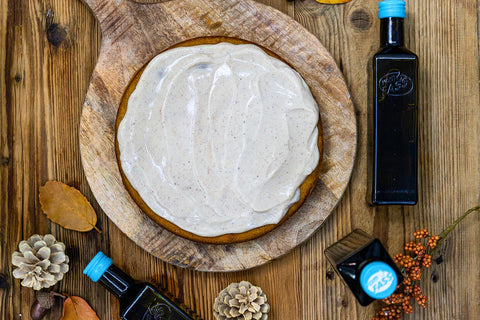
- Spread generously over the cooled cake, dust with a pinch of cinnamon, and serve.
Variations Worth Trying
This recipe is wonderfully adaptable. Here are some variations that work brilliantly:
- Gluten-free version: Replace the plain flour with a 1:1 gluten-free flour blend (one containing xanthan gum works best). The olive oil keeps the crumb moist even without gluten, so the texture barely changes.
- Vegan version: Replace the eggs with 2 flax eggs (2 tbsp ground flaxseed mixed with 6 tbsp water, left to thicken for 10 minutes). Use a vegan cream cheese for the frosting. The cake is naturally dairy-free already.
- Butternut squash swap: Substitute butternut squash puree 1:1 for pumpkin. The result is slightly sweeter and silkier.
- Chocolate drizzle: Melt 100g dark chocolate with 1 tbsp olive oil and drizzle over the frosted cake. The bitterness of dark chocolate against the sweet spice is magnificent.
- Loaf tin version: Pour the batter into a 900g (2lb) loaf tin and bake for 50 to 55 minutes. Perfect for slicing at the breakfast table.
- Citrus twist: Add the zest of one orange to the batter. Orange and pumpkin is a notable combination that lifts the whole flavour profile.
Frosting and Glaze Options
The cinnamon cream cheese frosting is the classic pairing, but it is not the only option:
- Maple glaze: Whisk 120g icing sugar with 2 tbsp pure maple syrup and 1 tbsp warm water until smooth. Drizzle over the cooled cake. Simple, elegant, and deeply autumnal.
- Citrus cream cheese frosting: Add the zest and juice of half a lemon to the basic cream cheese frosting for a brighter, tangier finish.
- Brown butter glaze: Melt 30g butter until it turns golden and smells nutty, then whisk with 120g icing sugar and a splash of milk. The toasted, caramel-like flavour is notable with pumpkin.
- Naked finish: Skip the frosting entirely and dust with icing sugar and a scattering of toasted pecans. Sometimes the simplest presentation is the most elegant.
For a showstopper, try a two-layer version: double the recipe, bake in two tins, and sandwich with cream cheese frosting. Top with crushed gingernut biscuits and a drizzle of walnut or pistachio oil for an extra layer of nutty richness.
Storage, Make-Ahead, and Freezing Tips
One of the genuine advantages of olive oil cakes is their exceptional keeping quality. Because the fat remains liquid, the crumb stays soft far longer than butter-based cakes.
- Room temperature: Unfrosted, the cake keeps well in an airtight container for 3 to 4 days. It actually improves on day two, as the spices mellow and the crumb becomes even more tender.
- Refrigerated: Once frosted with cream cheese, store in the fridge for up to 5 days. Bring to room temperature for 30 minutes before serving, cold cream cheese frosting can taste stiff.
- Freezing: Wrap the unfrosted cake tightly in cling film, then foil, and freeze for up to 3 months. Defrost at room temperature for 2 to 3 hours, then frost as normal. The texture is virtually identical to fresh.
- Make-ahead: Bake the cake and prepare the frosting separately up to 2 days in advance. Store the cake wrapped at room temperature and the frosting in a sealed container in the fridge. Frost on the day of serving for the best presentation.
Seasonal Serving and Presentation Ideas
This cake is a natural centrepiece for any autumn gathering. Here are some ideas for making it shine:
- Bonfire Night: Serve warm slices alongside mugs of hot cider or spiced apple juice. The smoky outdoor air and the warm spice of the cake are a perfect match.
- Halloween: Pipe the cream cheese frosting into swirls and top with tiny fondant pumpkins or a scattering of toasted pumpkin seeds for a festive touch.
- Sunday lunch dessert: Serve with a generous scoop of vanilla ice cream and a drizzle of maple syrup. The contrast of cold ice cream and warmly spiced cake is heavenly.
- Afternoon tea: Bake in a loaf tin, slice thinly, and serve on a board with good butter and a pot of Earl Grey. It sits beautifully alongside scones and sandwiches.
- Christmas: This cake works as a lighter alternative to traditional Christmas pudding. Garnish with sugared cranberries and rosemary sprigs for a notable winter presentation.
For an extra special touch, finish with a light drizzle of high-quality extra virgin olive oil over the frosted cake just before serving. It sounds unusual, but the grassy, peppery notes of a premium EVOO against the sweet cream cheese frosting is a revelation. Try a few drops from our olive oil range and taste the difference.
More Recipes to Explore
If you have enjoyed this pumpkin olive oil cake, you might also like these recipes from our collection:
- Roasted (Not Boring) Cauliflower - Another recipe where a great olive oil makes all the difference.
- Olive Oil Hasselback Roast Potatoes - The perfect savoury companion for your Sunday roast.
- Heart-Shaped Cheesecake - For when you want something sweet for a special occasion.
- The Best Courgette Muffins - Another vegetable-in-baking triumph that converts sceptics.
Frequently Asked Questions
Can I taste the olive oil in the finished cake?
With a mild extra virgin olive oil, the flavour is very subtle. You will notice a pleasant richness rather than a distinctly "olive oil" taste. If you use a strong, peppery oil, you may detect a gentle herbal note in the background, which many people find delicious. The pumpkin and spices do most of the flavour heavy lifting.
Can I use regular olive oil instead of extra virgin?
You can, but we would not recommend it. Regular (refined) olive oil has very little flavour and none of the polyphenol benefits that make EVOO special. The whole point of an olive oil cake is that the oil contributes to the taste, not just the texture. A quality EVOO from a trusted producer, like those in our extra virgin olive oil collection - is what makes this recipe sing.
What if I do not have pumpkin puree?
Butternut squash puree is the closest substitute and works beautifully. Sweet potato puree is another option, though it will give a slightly different, sweeter flavour. Courgette puree (squeezed dry) also works in a pinch, though the colour will be paler.
How do I know when the cake is done?
Insert a wooden skewer or cocktail stick into the centre of the cake. If it comes out clean or with just a few moist crumbs (not wet batter), the cake is ready. The top should be golden brown and spring back when lightly pressed. Avoid opening the oven door before 30 minutes, as the sudden temperature change can cause the cake to sink.
Can I make this cake ahead for a party?
Absolutely. Bake the cake up to 2 days in advance and store it unfrosted in an airtight container at room temperature. Prepare the frosting and keep it refrigerated. Frost the cake on the day you plan to serve it. The unfrosted cake also freezes beautifully for up to 3 months, simply wrap tightly in cling film and foil.
Recipe developed using BBC Good Food's guide to preparing pumpkin. For more on the health benefits of olive oil in cooking, see this overview from the American Heart Association. Spice pairing guidance informed by Serious Eats' complete spice guide.