
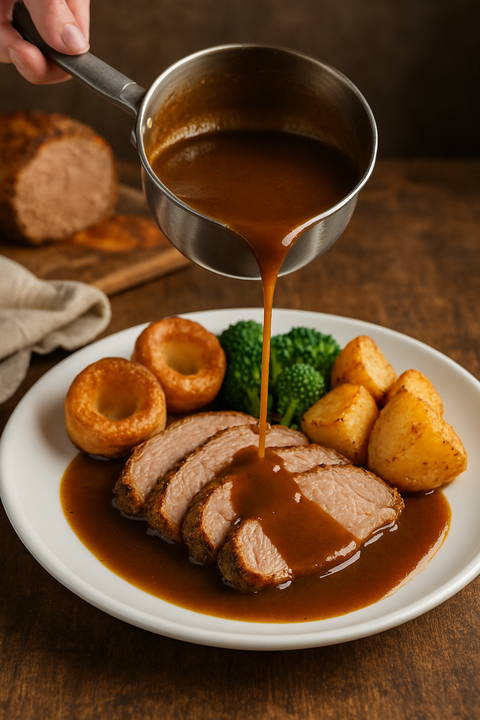
A truly great gravy can transform an ordinary roast dinner into something memorable. This elevated gravy recipe uses vomFASS Maletti Bianco - a white balsamic condiment with gentle sweetness and bright acidity, to add a layer of complexity that standard gravy simply cannot match. The result is a silky, deeply flavoured sauce that cuts through rich meats and makes vegetables sing.
Whether you are preparing a full Christmas spread, a leisurely Sunday roast, or simply want to dress up a midweek chicken, this recipe takes about 15 minutes and uses ingredients you likely already have in the cupboard. We have also included a from-scratch pan gravy method, make-ahead tips, common troubleshooting fixes, and five popular variations so you can adapt it to any meal.
Why Balsamic Vinegar Belongs in Your Gravy
Most British cooks reach for Bisto granules or a splash of wine when making gravy, and there is nothing wrong with either. But adding a quality balsamic condiment like Maletti Bianco introduces something neither of those can: a balanced combination of natural sweetness, gentle acidity, and aromatic depth that enhances the savoury character of meat juices rather than competing with it.
The science behind this is straightforward. When you roast meat, the Maillard reaction creates hundreds of complex flavour compounds in the browned bits stuck to the roasting tin, what chefs call the fond. Deglazing the tin with liquid dissolves those compounds into your gravy base. White balsamic condiment is particularly effective here because its acidity loosens the fond efficiently, while its grape-derived sugars amplify the caramelised notes already present. The result is a gravy that tastes richer and more complete without being overly sweet or sharp.
You can achieve a similar effect with red wine or dark balsamic, but Maletti Bianco has one distinct advantage: it adds depth without darkening the colour of your gravy, making it especially suitable for lighter meats like chicken, turkey, and pork.
Ingredients for Elevated Gravy
Quick Method (Using Granules)
- 2 tbsp gravy granules (beef, chicken, or vegetable)
- 240ml (1 cup) hot water or stock
- 1 tbsp vomFASS Maletti Bianco
- 1 tsp Dijon mustard (optional, for extra depth)
- 1 small garlic clove, crushed, or ½ tsp garlic powder
- 1 tbsp unsalted butter
- Freshly ground black pepper, to taste
From-Scratch Method (Pan Gravy)
- Pan drippings from your roast (about 2-3 tbsp of fat)
- 2 tbsp plain flour
- 500ml good-quality stock (beef, chicken, or vegetable, homemade is best)
- 1-2 tbsp vomFASS Maletti Bianco
- 1 tsp Dijon mustard
- 1 tbsp unsalted butter (to finish)
- Salt and freshly ground black pepper
Cook's note: For the richest possible flavour, use homemade stock. If you are using shop-bought, choose a low-sodium variety so you can control the seasoning yourself. A splash of quality cooking wine added before the stock creates another dimension of flavour.
Step-by-Step Instructions
Quick Method
- Dissolve the granules. Stir the gravy granules into hot water in a small saucepan over medium heat. Whisk continuously until smooth and beginning to thicken, about 1-2 minutes.
- Add the flavour builders. Stir in the Maletti Bianco, Dijon mustard, and crushed garlic. Reduce the heat to low and simmer gently for 2-3 minutes, allowing the flavours to meld.
- Finish with butter. Remove from heat and whisk in the butter until fully melted and the gravy has a glossy, silky sheen.
- Season and adjust. Taste and adjust with black pepper and, if you want a brighter kick, another small splash of Maletti Bianco. Serve immediately.
From-Scratch Pan Gravy Method
- Start with the fond. Once your roast is resting, place the roasting tin over medium heat on the hob. You want about 2-3 tablespoons of fat in the tin, pour off any excess but keep those browned bits.
- Make the roux. Sprinkle the flour into the hot drippings and whisk vigorously for 1-2 minutes. The flour should turn golden and smell nutty. This is your thickening base, a classic roux.
- Deglaze with Maletti Bianco. Pour in the Maletti Bianco and scrape up every bit of fond from the bottom of the tin. Watch it bubble and reduce for about 30 seconds.
- Add stock gradually. Pour in the stock a ladleful at a time, whisking constantly to prevent lumps. Once all the stock is incorporated, bring to a gentle simmer.
- Simmer and reduce. Cook for 8-10 minutes, stirring occasionally, until the gravy coats the back of a spoon. It will thicken further as it cools, so err on the slightly thinner side.
- Strain if desired. For a perfectly smooth gravy, pour through a fine-mesh sieve into a warm jug. This removes any lumps and bits of garlic or herb.
- Finish. Whisk in the butter and Dijon mustard. Season with salt and pepper to taste.
Understanding Roux-Based vs Reduction Gravies
There are two fundamentally different approaches to gravy, and understanding both helps you choose the right one for each meal.
A roux-based gravy starts with fat and flour cooked together, then thinned with stock. This produces a thicker, more opaque sauce with a velvety mouthfeel. It is the traditional British approach and works beautifully for roast dinners where you want the gravy to cling to every forkful of meat and potato. The from-scratch method above uses this technique.
A reduction gravy skips the flour entirely. Instead, you deglaze the roasting tin with wine or stock and simply simmer until the liquid reduces by half or more. The result is thinner, more intensely flavoured, and slightly glossy, closer to a French jus. Finish with a knob of cold butter (a technique called monter au beurre) for body and shine.
Both methods benefit enormously from a good balsamic condiment. In a roux-based gravy, the Maletti Bianco adds complexity to the base. In a reduction gravy, it intensifies the natural meat flavours and creates a beautiful sweet-savoury balance.
Why Quality Ingredients Make the Difference
Gravy is essentially a concentrated sauce, which means every ingredient contributes directly to the final flavour. Here is why each component matters:
- Stock: The backbone of any gravy. Homemade stock made from roasted bones gives a depth that no cube or powder can replicate. If using shop-bought, look for versions with a short, recognisable ingredients list.
- Balsamic condiment: Premium balsamic vinegars are aged for years in wooden casks, developing complex flavours that cheap imitations simply do not have. The Maletti Bianco used here brings gentle grape sweetness without the dark colour of traditional balsamic.
- Butter: Whisking in cold butter at the end (monter au beurre) creates an emulsion that gives the gravy body, gloss, and a rounded, luxurious mouthfeel.
- Drippings: The concentrated meat juices from your roast are irreplaceable. They contain gelatin from collagen, rendered fat, and Maillard compounds that give gravy its savoury depth.
- Olive oil: If you are making a vegetarian gravy without meat drippings, start with a generous glug of quality extra virgin olive oil as your fat base. It provides richness and helps the roux develop properly.
Serving Suggestions
This elevated gravy pairs beautifully with a wide range of dishes:
- Sunday roast: Pour generously over roast beef, chicken, lamb, or pork alongside hasselback roast potatoes and balsamic pancetta Brussels sprouts.
- Christmas dinner: Serve with honey glazed ham, roast turkey, and all the trimmings.
- Midweek meals: Drizzle over bangers and mash, pie and chips, or a simple pan-fried chicken breast.
- Vegetarian roast: Equally delicious over a nut roast, stuffed squash, or roasted cauliflower, just use vegetable stock and olive oil instead of drippings.
Make-Ahead and Storage Tips
Good gravy actually improves with a bit of resting time, which makes it an ideal make-ahead component for a big roast dinner.
- Fridge: Cool completely, then store in an airtight container for up to 3 days. Reheat gently in a saucepan over low heat, whisking in a splash of stock if it has thickened too much.
- Freezer: Gravy freezes well for up to 3 months. Freeze in ice cube trays for easy portioning, then transfer the cubes to a freezer bag. Thaw overnight in the fridge or defrost gently in a saucepan.
- Make the base ahead: You can prepare the roux and stock base up to a day before. Stop before adding the butter and Maletti Bianco. When ready to serve, reheat and finish with the butter and balsamic for the freshest flavour.
Troubleshooting Common Gravy Problems
Even experienced cooks run into gravy issues from time to time. Here are the most common problems and how to fix them:
- Too thin: Simmer uncovered for a few more minutes to reduce. Alternatively, mix 1 teaspoon of cornflour with 1 tablespoon of cold water, then whisk into the simmering gravy. It will thicken within a minute.
- Too thick: Whisk in a splash of hot stock or water until you reach the desired consistency. Add it gradually. You can always thin more but cannot easily thicken again.
- Lumpy: Pour through a fine-mesh sieve into a clean saucepan. For stubborn lumps, blitz briefly with a stick blender. To prevent lumps in future, always add liquid gradually while whisking continuously.
- Too salty: Add a splash more Maletti Bianco, the sweetness and acidity help balance salt. A small knob of unsalted butter also rounds out excessive saltiness. In extreme cases, dilute with unsalted stock.
- Bland or flat: This usually means insufficient fond or weak stock. Add a small splash of Maletti Bianco for acidity, a pinch of mustard for warmth, or a teaspoon of Worcestershire sauce for umami depth.
- Greasy: If there is too much fat floating on the surface, tilt the pan and skim with a spoon. Alternatively, drag a piece of kitchen paper across the surface to absorb excess grease.
Five Popular Gravy Variations
Once you have mastered the base recipe, try these popular British variations to match different roasts and occasions.
Red Wine Gravy
After making the roux, deglaze with 150ml of full-bodied red wine before adding stock. Let the wine reduce by half, then proceed as normal. The wine adds tannin and depth, perfect with beef or lamb. Browse our red wine collection for cooking-worthy bottles.
Onion Gravy
Slowly cook 2 large onions (thinly sliced) in butter and a drizzle of extra virgin olive oil over low heat for 20-25 minutes until deeply caramelised and golden. Add the flour, then stock and Maletti Bianco as normal. The natural sugars in the onions create an intensely savoury, sweet gravy that is the classic accompaniment to bangers and mash.
Mushroom Gravy
Sauté 200g of sliced chestnut mushrooms in butter until golden and all moisture has evaporated. Add a splash of Maletti Bianco to deglaze, then build the roux and add stock. Mushrooms contribute glutamate, the amino acid responsible for umami, making this an exceptionally savoury gravy. Excellent with vegetarian roasts.
Cranberry and Balsamic Gravy
Stir 2 tablespoons of cranberry sauce into the finished gravy along with an extra splash of balsamic vinegar. The tartness of cranberry and the sweetness of balsamic create a festive gravy that is magnificent with turkey and Christmas dinner.
Cider and Apple Gravy
Replace half the stock with dry cider and add 1 tablespoon of apple sauce. Finish with Maletti Bianco and butter as usual. This is the natural partner for roast pork, the apple and cider echo the classic pork-and-apple pairing while the balsamic adds sophistication.
Christmas and Sunday Roast Context
In British cooking, gravy is not a garnish. It is the sauce that ties the entire plate together. A proper Sunday roast without gravy is like fish and chips without salt: technically edible, but missing the point entirely.
At Christmas, the pressure is even higher. You are cooking for a crowd, timing multiple dishes to land on the table simultaneously, and the gravy needs to complement everything from the turkey to the roast parsnips to the stuffing. This is precisely where the make-ahead approach shines: prepare the base a day ahead, then finish with Maletti Bianco and butter while the meat rests. You will have one less thing to worry about during the final rush.
The beauty of this elevated gravy is its versatility. The same recipe works whether you are serving a relaxed Sunday roast for four or an elaborate Christmas dinner for twelve. Scale the quantities proportionally, roughly 100ml of finished gravy per person is a good guide, and taste as you go.
Frequently Asked Questions
Can I use dark balsamic vinegar instead of Maletti Bianco?
Yes, absolutely. Aceto Balsamico Maletti (the dark version) works beautifully and adds a deeper, more caramelised note. The main difference is colour, dark balsamic will make your gravy noticeably darker, which is fine for beef but may look unusual with lighter poultry. Start with 1 tablespoon and adjust to taste.
How do I make this gravy vegetarian?
Use vegetable stock and replace the meat drippings with 2 tablespoons of olive oil or butter for the roux base. The mushroom variation above is particularly good for a vegetarian roast, as the mushrooms provide the umami depth that meat drippings would normally contribute.
Can I make gravy without flour for a gluten-free version?
Yes. Use the reduction method instead, simply deglaze the roasting tin with stock and Maletti Bianco, then simmer until reduced by about half. Finish with butter for body. Alternatively, substitute cornflour for the plain flour in the roux method, using the same quantity.
How far in advance can I make gravy?
The base (roux plus stock) can be made up to 24 hours ahead and stored in the fridge. The Maletti Bianco and butter should be added fresh when you reheat, as the balsamic flavour is brightest when it has not been cooked for too long. Gravy also freezes well for up to 3 months.
What is the best stock for gravy?
Homemade stock is always best, save your roast chicken carcasses and beef bones. For shop-bought, choose products with a short ingredients list and low sodium so you control the seasoning. Jellied stock (the kind that wobbles when cold) has more gelatin and produces a richer, more unctuous gravy than thin, watery stock.